
 Montenegro


About Podgorica
Podgorica makes no great claims on the traveller — flattened in the Second World War and rebuilt as socialist Titograd, Montenegro's capital is a low-rise, leafy city of riverside cafes, wide boulevards and the odd Ottoman relic in the old Stara Varos quarter.
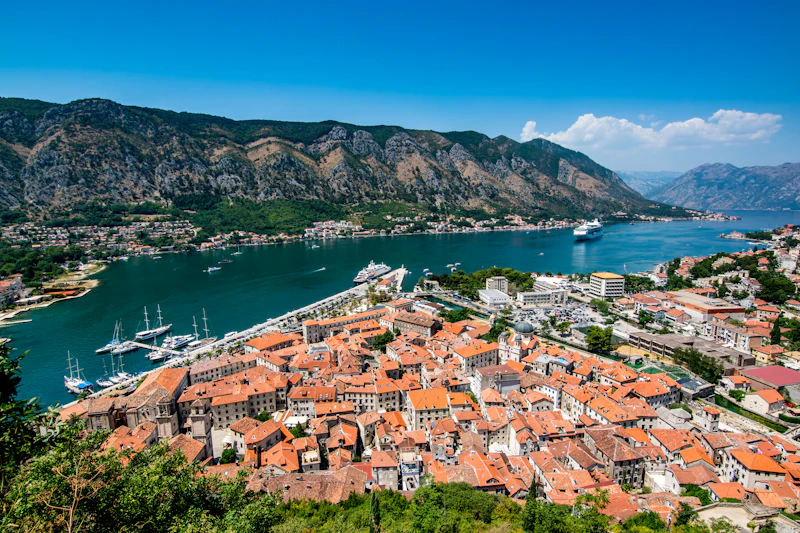
What it offers instead is position: within an hour you can be drifting among the pelicans of Lake Skadar, climbing to the cliff-face monastery of Ostrog, or dropping down to the fjord-like Bay of Kotor and the Adriatic beaches.
Montenegrins are laid-back to the point of philosophy — there is even a tongue-in-cheek local code praising the art of doing nothing — and fiercely hospitable once you sit down.
Eat smoked Njegusi ham and fresh river fish, sip a strong domestic wine or rakija, and let the slow pace win you over.
Get to Podgorica
Round trip from Prague, any dates in November 2026.
Day trips from Podgorica
- Half day
Lake Skadar
~30 min

The largest lake in the Balkans begins on Podgorica's doorstep — a maze of water lilies, islet monasteries and pelicans, best seen from a slow boat or the vineyard villages along its shore.
- Half day
Ostrog Monastery
~40 minMontenegro's most astonishing sight: a whitewashed Orthodox monastery built directly into a sheer cliff face, a place of pilgrimage clinging improbably to the rock high above the Zeta valley.
 → in WayoniDay trip

About Montenegro
A bay under bare mountains
Stone villages on the water in the Bay of Kotor, black peaks rising straight behind the beach, and a whole country you can drive in a week.
Explore MontenegroRegions, highlights and when to go